


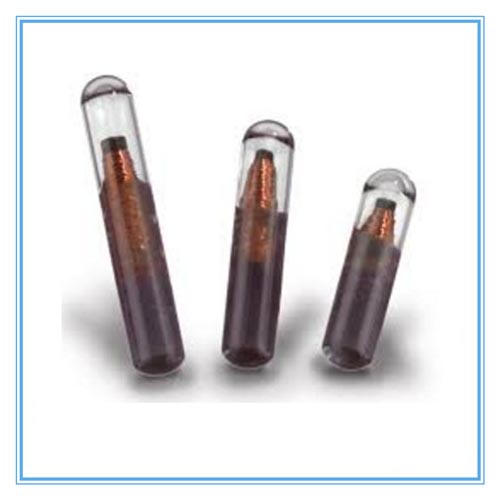


Animal RFID tag Description
D.O RFID Tag Manufacturer fully automated production processes ensure consistent tag quality and reliability. Patented direct-bonding technology enables more compact tag designs and optimized read ranges, delivering exceptional size-to-performance ratios while ensuring consistent animal identification and RFID tracking performance.
RFID Animal Identification Tag is an innovative RFID ear tag, RFID glass tag based on UHF technology, designed to track livestock, breeding stock and laboratory animals involved in costly research projects.
Tried and tested in rigorous field testing, our Animal Identification Tags provide top performance for the entire animal life cycle, even in harsh outdoors conditions.
Primary Applications:
- Animal management
- Asset Tracking
- Farm Management
- Live stock identification
- Animal tracking


Animal RFID tags provide electronic identification for pets, livestock, laboratory animals, and other managed animal populations. By assigning an electronic identification number to an individual animal, RFID technology helps farmers, veterinarians, breeders, research institutions, and animal management organizations maintain more accurate records.
Unlike visual tags that must be read by a person, RFID tags communicate with compatible readers through radio-frequency signals. Depending on their design, they can be attached to an animal’s ear, implanted under the skin, placed inside a ruminal bolus, or integrated into a special leg band or identification ring.
However, not all animal RFID tags use the same technology. A 134.2kHz injectable microchip for a dog is different from a UHF livestock ear tag, even though both are used for animal identification. Frequency, communication protocol, chip type, tag construction, and regional identification requirements all affect product selection.
DO RFID supplies animal identification products, including RFID glass microchips and compatible animal readers for different applications. This guide explains the main types of animal RFID tags, compares their technical characteristics, and provides a practical purchasing checklist for distributors, veterinary suppliers, and livestock equipment manufacturers.
1. What Are Animal RFID Tags?
Animal RFID tags are electronic identification devices that use radio-frequency communication to identify individual animals.
A typical passive RFID tag contains a microchip and an antenna. When a compatible RFID reader generates an electromagnetic field, the tag receives energy and transmits its stored identification information.
Most passive animal identification transponders do not need an internal battery. Their identification data can be read when they enter the effective reading area of a suitable scanner.
The identification number can then be associated with an external digital record containing information such as:
- Animal identification number.
- Species, breed, and date of birth.
- Owner or farm information.
- Vaccination and veterinary records.
- Breeding and reproduction history.
- Feeding and weight records.
- Location or movement events recorded by the management system.
An important distinction is that the RFID tag itself normally stores identification information, not the animal’s complete medical or ownership history. The reader retrieves the ID, and the connected software uses that number to access the relevant database.
RFID identification is therefore different from GPS tracking. A passive animal microchip does not continuously transmit its location. It must be scanned by a compatible reader within its operating range.
For different animal identification requirements, explore the DO RFID Animal RFID Tags product range.
2. Main Types of Animal RFID Tags
The correct tag format depends on the species, management process, installation location, and required identification system.
2.1 RFID Ear Tags for Livestock
RFID ear tags are widely used for cattle, sheep, goats, and pigs. They are attached to the animal’s ear using a suitable applicator and may combine a visible identification number with an electronic transponder.
Typical features include:
- External ear-mounted construction.
- Visible printed or laser-marked identification.
- Electronic identification through RFID.
- Different sizes, colors, and locking structures.
- Compatibility with selected handheld or panel readers.
Ear tags are useful for large livestock operations because workers can identify animals during routine handling, weighing, vaccination, breeding, and movement inspections.
Some models use low-frequency 134.2kHz technology with FDX-B or HDX communication. Other systems use UHF technology for different reading workflows.
These technologies should not be treated as interchangeable. A buyer must confirm whether the tag is intended for an official livestock identification program, a private farm management system, or a proprietary tracking application.
When evaluating ear tags, check not only the RFID chip but also the applicator compatibility, locking mechanism, retention performance, material durability, and species approval requirements.
2.2 Injectable RFID Glass Microchips
An injectable RFID glass microchip is a miniature passive transponder enclosed in a biocompatible glass capsule.
It is typically implanted under an animal’s skin using a dedicated injection device by an appropriately trained veterinary professional or other qualified personnel, according to local requirements.
This form of identification is especially common for:
- Dogs and cats.
- Horses and other equids, where permitted.
- Small pets and exotic animals.
- Laboratory and research animals.
- Selected breeding and livestock applications.
The primary advantage is that the identification device remains associated with the animal without requiring an externally attached tag.
DO RFID offers RFID animal microchips in glass-tube PET tag formats, with different frequency, chip, size, and packaging options depending on the selected model.
Typical glass microchip construction
| Component | Function |
|---|---|
| RFID integrated circuit | Stores the electronic identification data |
| Copper antenna coil | Receives energy and communicates with the reader |
| Biocompatible glass capsule | Protects the electronic components |
| Optional coating | Available on selected configurations for additional surface protection |
A common product configuration uses a 134.2kHz transponder with FDX-B technology. The exact chip and dimensions should be confirmed against the supplier’s model specification.
2.3 RFID Ruminal Boluses
A ruminal bolus is an animal identification transponder designed to be administered orally to suitable ruminants.
After administration, the bolus remains inside the animal’s reticulorumen, where its location and physical design help it remain in place.
It can be used for individual identification in cattle, sheep, and other suitable livestock, depending on the product design and applicable requirements.
Important purchasing considerations include:
- Bolus dimensions and weight.
- Intended animal species and minimum body weight.
- Retention characteristics.
- RFID frequency and protocol.
- Compatibility with the farm’s reading equipment.
- Evidence of relevant testing and regulatory acceptance.
A ruminal bolus should not be selected solely by frequency. Its physical dimensions and suitability for the intended species are equally important.
2.4 RFID Leg Tags and Animal Identification Rings
Leg tags and RFID identification rings are used in selected applications involving poultry, pigeons, and other birds.
They can identify individual animals during breeding, feeding, research, and movement monitoring.
The tag may be incorporated into a leg band or a specially designed ring. Product selection depends on the bird’s size, leg dimensions, weight, and required reading arrangement.
For smaller animals, tag weight and physical comfort are particularly important. The identification system should be tested with the actual animal species and ring configuration.
2.5 PIT Tags for Fish and Aquatic Animals
Passive Integrated Transponder (PIT) tags are commonly used for identifying fish and other aquatic animals in research, aquaculture, and population monitoring.
A PIT tag stores a unique identification number that can be retrieved by a suitable reader when the animal passes through the reader’s effective field.
Typical uses include:
- Fish population studies.
- Aquaculture breeding records.
- Migration and movement research.
- Stock identification.
- Individual growth monitoring.
- Long-term research data collection.
The tag size, implantation method, reader antenna, and operating frequency must be selected according to the species and study design.
For aquatic identification projects, see the DO RFID PIT Tag Reader for Fish.
Comparison of Animal RFID Tag Types
| Tag Type | Typical Animals | Installation | Main Advantage | Important Selection Factor |
|---|---|---|---|---|
| RFID ear tag | Cattle, sheep, goats, pigs | Attached to the ear | Visible and electronic identification | Retention, applicator, official approval |
| Glass microchip | Dogs, cats, small pets, research animals | Subcutaneous implantation | Compact and unobtrusive | Frequency, chip protocol, reader compatibility |
| Ruminal bolus | Cattle and suitable ruminants | Oral administration | Internal identification | Size, weight, retention |
| Leg tag / ring | Birds and poultry | Attached to the leg | Individual bird identification | Weight, comfort, antenna and reader design |
| PIT tag | Fish and aquatic animals | Species-specific implantation | Useful for research and recapture identification | Tag size, reader antenna, frequency |
3. What Frequency Do Animal RFID Tags Use?
Frequency is one of the first specifications buyers should confirm.
Animal identification products may use low-frequency (LF), high-frequency (HF), or ultra-high-frequency (UHF) technology. The required choice depends on the application and the identification system already in use.
| RFID Frequency | Technology | Typical Applications | Key Consideration |
|---|---|---|---|
| 125kHz | LF | Selected legacy identification systems and proprietary applications | Not automatically compatible with ISO animal identification systems |
| 134.2kHz | LF | Livestock identification and many pet microchip systems | Commonly associated with ISO 11784/11785 animal identification |
| 13.56MHz | HF | Selected specialized identification and NFC applications | Requires a compatible HF chip and reader |
| 860–960MHz | UHF | Certain livestock, inventory, and specialized animal tracking systems | Regional frequency rules and tag protocols must be confirmed |
Why Is 134.2kHz Common for Animal Identification?
The 134.2kHz frequency is widely used in standardized low-frequency animal identification systems.
It is commonly associated with FDX-B and HDX transponders designed around ISO 11784 and ISO 11785.
These systems are used for individual animal identification because compatible readers can retrieve standardized identification data from the transponder.
Nevertheless, selecting 134.2kHz is not enough by itself. The reader must also support the transponder’s communication protocol and the required identification format.
Can a 125kHz RFID Reader Read a 134.2kHz Animal Microchip?
Not necessarily.
Although both frequencies belong to the low-frequency RFID category, they are different operating frequencies and may use different communication protocols.
A common 125kHz access-control reader designed for EM4100-compatible cards should not be assumed to read a 134.2kHz animal microchip.
Similarly, a standard animal identification reader should not automatically be expected to read every proprietary 125kHz transponder.
For animal identification projects, always confirm the reader’s supported frequency, modulation, and protocol before purchasing.
Is UHF Better Than LF for Animal Identification?
Neither technology is universally better.
UHF RFID can be useful for reading multiple compatible tags over a larger area, depending on the system and tag design. LF animal identification systems are widely used where standardized individual animal identification is required.
| Factor | LF 134.2kHz | UHF |
|---|---|---|
| Common animal identification use | Established livestock and pet identification systems | Selected tracking and inventory systems |
| Reading range | Generally close-range | Can support longer-range identification |
| Multi-tag operation | Depends on reader and system | Often suitable for multi-tag inventory |
| Standard compatibility | ISO 11784/11785 systems are common | Must be confirmed separately |
| Metal and liquid considerations | Different coupling behavior from UHF | Tag design and installation environment can significantly affect performance |
For regulated livestock identification, check the relevant authority’s accepted device types instead of selecting UHF only because it offers longer reading distances.
4. FDX-B vs. HDX: Understanding Animal RFID Communication Protocols
FDX-B and HDX are two important communication technologies used in 134.2kHz animal identification systems.
They are different methods of transmitting data between a transponder and a reader.
What Is FDX-B?
FDX-B stands for Full Duplex B.
In an FDX-B system, the transponder communicates its stored identification information while it is energized by the reader’s electromagnetic field.
FDX-B is widely used in animal identification applications, including many injectable pet microchips and selected livestock transponders.
What Is HDX?
HDX stands for Half Duplex.
An HDX transponder stores energy from the reader’s field and transmits its information during a pause in the reader’s excitation signal.
HDX is used in selected livestock identification systems, including some cattle ear tags and other animal transponder formats.
FDX-B vs. HDX Comparison
| Comparison | FDX-B | HDX |
|---|---|---|
| Full name | Full Duplex B | Half Duplex |
| Communication process | Tag responds while energized by the reader | Tag stores energy and responds during a reader-field pause |
| Common applications | Pet microchips and selected livestock tags | Selected cattle and livestock identification systems |
| Reader compatibility | Requires FDX-B support | Requires HDX support |
| Purchasing consideration | Confirm exact chip and data format | Confirm reader timing and HDX compatibility |
A reader that supports both FDX-B and HDX offers greater flexibility when a farm or veterinary organization uses multiple transponder types.
DO RFID’s animal RFID reader product range includes readers designed for animal identification. Before ordering, confirm whether the selected model supports FDX-B only or both FDX-B and HDX.
5. ISO 11784 and ISO 11785: What Should Buyers Know?
Standards are important when purchasing animal RFID tags for regulated identification systems or international livestock traceability projects.
Two key standards are ISO 11784 and ISO 11785.
ISO 11784: Animal Identification Code Structure
ISO 11784 specifies the structure of the radio-frequency identification code used for animals.
It provides the coding framework that allows an animal transponder’s identification information to be interpreted consistently.
The current published edition is ISO 11784:2024, published in December 2024.
Official reference: ISO 11784:2024 – Code Structure.
ISO 11785: Technical Concept
ISO 11785 describes how an animal transponder is activated and how stored information is transferred to a reader.
The current published edition is ISO 11785:2026, published in March 2026.
Official reference: ISO 11785:2026 – Technical Concept.
When purchasing in 2026 or later, buyers should confirm which editions and test requirements apply to their target market and official identification program. A product page that simply says “ISO 11784/11785” may not identify the exact standard edition or testing evidence.
What Is ICAR Certification?
ICAR is the International Committee for Animal Recording. It acts as the registration authority for ISO 11784/11785 animal identification systems.
ICAR’s certification procedures distinguish several levels of testing.
| Test or Registration | What It Evaluates |
|---|---|
| ISO conformance testing | Checks transponder conformance with ISO 11784/11785 requirements, including resonance frequency and bit pattern |
| Manufacturer/product registration | Successful conformance testing leads to registration and allocation of a manufacturer/product code |
| Performance testing | Evaluates parameters such as modulation amplitude, bit length stability, and minimum activation field strength |
| Composition and environmental testing | Evaluates materials, mechanical performance, and environmental durability |
The performance test is a separate evaluation and is not the same as the mandatory conformance test. ICAR also offers additional testing and certification for device composition and environmental performance.
Buyers can check the ICAR animal identification certification procedures and the ICAR registry of certified RFID devices.
Do not assume that a supplier’s general statement of “ISO compliant” automatically means a particular model has completed every ICAR test or received full ICAR certification. Request the actual product code, registration record, or test documentation when these requirements apply to the project.
6. DO RFID Animal Microchip Options and Technical Specifications
DO RFID offers different animal glass microchip configurations for pet identification, livestock management, and research applications.
The product range includes different frequencies, chip choices, dimensions, and packaging options. These should be treated as separate model configurations rather than combined into one universal specification.
Typical 134.2kHz Glass Microchip Configuration
One product configuration is based on a 134.2kHz passive transponder using an FDX-B communication format.
| Parameter | Published Product Option |
|---|---|
| Product type | Injectable animal RFID glass microchip |
| Frequency | 134.2kHz |
| Protocol | ISO 11784/11785 FDX-B, according to the selected model |
| Chip | EM4305 or other specified chip option |
| Material | Biocompatible glass |
| Available dimensions | Examples include 1.4 × 8mm and 2.12 × 12mm formats |
| Surface protection | Optional Parylene coating on selected versions |
| Power source | Passive; activated by the reader |
| Identification | Unique electronic identification number |
For detailed product information, see the DO RFID ISO 11785-compatible implantable animal microchip.
Glass Microchip Size Options
Different animal species and implantation requirements may call for different microchip dimensions.
The published DO RFID product range includes examples such as:
| Example Size | Typical Selection Consideration |
|---|---|
| 1.25 × 7–8mm | Very small identification format |
| 1.4 × 8–10mm | Compact microchip configuration |
| 2.12 × 10⁻¹²mm | Common glass microchip size option |
| Larger formats | Selected applications requiring different antenna or transponder designs |
The dimensions above represent different product options. They do not mean every chip is available with every frequency and protocol.
The exact combination of size, chip, frequency, and communication format should be confirmed on the product specification before ordering.
For additional formats and chip selections, view the DO RFID small pet microchip and glass tag range.
Bioglass and Parylene Coating
Biocompatible glass is used to encapsulate the electronic components of an injectable microchip.
The capsule protects the transponder and provides a smooth outer surface for the intended implantation application.
Some models can also be supplied with a Parylene coating. The availability and purpose of this coating should be confirmed for the selected chip format rather than assumed for every product.
For veterinary and animal research projects, buyers should request the appropriate material information and implantation-related documentation.
7. How Far Can an Animal RFID Tag Be Read?
Reading distance depends on the transponder, reader, antenna, animal environment, and the way the tag is presented.
A large livestock ear tag and a very small injectable glass microchip do not necessarily have the same reading performance.
Important factors include:
Tag antenna size: A larger coil can have different coupling characteristics from a very small capsule antenna.
Reader antenna: The antenna size, coil design, tuning, and orientation affect the effective reading area.
Tag orientation: Reading performance can change when the transponder is rotated relative to the reader.
Animal body position: The animal’s body and implantation location may affect the practical scanning setup.
Reader power and design: Different reader models have different activation fields and operating characteristics.
DO RFID’s glass microchip pages describe different reading-distance figures depending on the reader and configuration. One product description gives approximately 5–8cm with compatible readers, while another lists a broader range depending on reader setup.
For this reason, buyers should not treat one reading-distance number as a universal specification for every glass microchip.
A practical test should use the selected microchip, intended animal reader, and actual scanning position.
8. Which Animal RFID Reader Should You Use?
An RFID tag is only one part of an animal identification system. A compatible reader is needed to activate and retrieve the identification information.
The correct reader depends on the tag’s frequency and communication protocol.
| Application | Reader Requirement |
|---|---|
| Pet microchip identification | Compatible 134.2kHz animal scanner, usually FDX-B support |
| Livestock ear tag reading | Reader matching the tag’s FDX-B or HDX protocol |
| Mixed FDX-B and HDX farm systems | Reader explicitly supporting both formats |
| Temperature microchip reading | Reader capable of retrieving data from the compatible temperature-sensing chip |
| UHF animal inventory | Reader supporting the selected UHF band and tag protocol |
| Fish PIT identification | Reader and antenna designed for the selected PIT transponder |
Handheld Animal RFID Readers
Portable animal RFID readers are convenient for veterinarians, farmers, breeders, animal shelters, and field inspection teams.
A handheld reader allows the operator to scan a pet microchip, livestock ear tag, or compatible transponder without installing a fixed reading station.
DO RFID offers an animal RFID reader designed for low-frequency animal identification. Its published product information includes 134.2kHz operation and support for selected FDX-B and HDX animal tags.
However, different models may support different combinations of protocols. Always confirm the model-specific compatibility before using it with a mixed tag population.
Temperature Microchip Readers
Some animal microchips include an additional temperature-sensing function.
These devices combine an identification number with temperature information from an integrated sensor. The reader must support the specific sensor chip and its data-reading method.
DO RFID also offers a temperature microchip reader with USB virtual COM and Bluetooth virtual COM connection options for supported temperature microchip configurations.
Temperature information obtained from an implanted sensor reflects the temperature at the sensor’s location. It should not automatically be treated as a clinical core-body temperature measurement or a replacement for veterinary diagnosis.
9. Applications of Animal RFID Tags
Livestock Identification and Traceability
Individual identification is important for cattle, sheep, goats, and pigs.
RFID tags can help farms maintain records for:
- Animal ownership.
- Breeding history.
- Vaccination and health records.
- Weight and growth monitoring.
- Farm transfers.
- Movement and traceability events.
When integrated with a compatible livestock management system, an animal’s RFID number can be used as the reference for its digital record.
Pet Identification and Recovery
Injectable glass microchips are commonly used for permanent pet identification.
When a lost dog or cat is taken to a veterinary clinic or animal shelter, a compatible scanner can retrieve its microchip ID. The number can then be checked against an external registration database to help identify the owner.
The microchip itself does not contain the owner’s contact details. The identification number must be registered and the database information kept current.
For pet identification projects, the DO RFID glass PET microchip range provides different chip and size options.
Animal Breeding Management
Breeders can use RFID identification to connect individual animals with records about parentage, breeding cycles, offspring, and performance.
This is useful for managing breeding stock and reducing manual identification errors.
Laboratory Animal Identification
Research institutions need reliable individual identification to associate an animal with its study records, sample information, and observations.
Compact injectable microchips can support identification workflows for selected research animals, subject to the research protocol and animal welfare requirements.
Aquaculture and Fish Research
PIT tags can help identify individual fish for population studies, aquaculture management, and migration research.
When fish are recaptured or pass through a suitable antenna, the reader can retrieve their unique identification numbers.
For equipment options in this field, see the DO RFID fish PIT tag reader.
10. Regional Animal Identification Requirements
Animal identification requirements vary by country, species, and program. A commercially available RFID tag is not automatically approved for official livestock identification.
For example, in the United States, USDA APHIS defines acceptable official identification methods and numbering systems for relevant livestock. The 15-digit Animal Identification Number (AIN) includes an 840 prefix for the United States, and its use is subject to the applicable animal origin and official identification rules.
Some official programs also require approved devices and specific species eligibility.
Before ordering animal RFID tags for a regulated market, confirm:
- Whether electronic identification is mandatory for the species.
- Whether the tag must be officially approved.
- Whether the product must appear in a government or ICAR registry.
- Whether a particular numbering structure is required.
- Whether the device is approved for the intended species.
- Whether an authorized applicator or implantation procedure is required.
For U.S. projects, consult the USDA APHIS Animal Identification Reference Guide.
For other countries, buyers should check the relevant agricultural, veterinary, or animal traceability authority.
11. How to Choose the Right Animal RFID Tags
The best tag is not necessarily the smallest, cheapest, or longest-range option. It is the one that matches the animal, identification program, reader, and daily operating process.
Step 1: Confirm the Animal Species
Start by identifying the species and size of the animal.
A microchip for a small pet, an electronic cattle ear tag, and a fish PIT tag have different physical requirements.
Step 2: Choose the Tag Format
Decide whether the project needs:
- An external ear tag.
- An injectable glass microchip.
- A ruminal bolus.
- A leg band or ring.
- A PIT tag.
The installation method and animal welfare requirements should be considered before choosing the product.
Step 3: Confirm Frequency and Protocol
Provide the existing reader model or required communication standard.
For standardized low-frequency animal identification, confirm 134.2kHz and the required FDX-B or HDX support.
Do not assume a 125kHz or 13.56MHz tag is compatible simply because it is an RFID product.
Step 4: Confirm Size and Material
For glass microchips, check the capsule diameter, length, material, coating, and compatible implantation equipment.
For ear tags, check the body size, locking structure, material, printing, and applicator.
Step 5: Verify the Identification Code
For projects using official animal identification numbers, confirm the code format and manufacturer/product registration requirements.
Do not use duplicated or arbitrary identification numbers where unique registered codes are required.
Step 6: Test the Tag and Reader Together
Before placing a bulk order, request actual samples and test them with the intended reader.
Evaluate:
- Correct frequency and protocol.
- Identification number output.
- Reading distance and orientation.
- Repeat reading consistency.
- Performance in the real application environment.
- Data transfer to the intended software.
12. Quality Control and Testing Before Bulk Purchasing
For distributors and animal identification system integrators, a reliable supplier should be able to provide clear technical specifications and consistent production quality.
The following checklist can be used when evaluating animal RFID tags.
| Inspection Item | What to Verify |
|---|---|
| Frequency | Match the approved product specification |
| Chip type | Confirm the exact IC and model |
| Protocol | Verify FDX-B, HDX, or another required format |
| Identification number | Check uniqueness and code format |
| Dimensions | Measure the actual capsule or tag |
| Glass or plastic housing | Check appearance, surface quality, and construction |
| Coating | Confirm whether Parylene or another coating is included |
| Reading performance | Test with the intended reader |
| Read consistency | Repeat scans in different orientations |
| Environmental performance | Verify the required tests and documentation |
| Packaging | Confirm sterile packaging where applicable |
| Batch traceability | Record model, batch number, and identification code range |
For injectable microchips, buyers should also request documentation relevant to the intended veterinary application and follow appropriate professional implantation procedures.
For ear tags and ruminal boluses, mechanical durability and retention are particularly important because the device remains in an outdoor animal management environment.
13. OEM and Wholesale Animal RFID Tags
Different distributors, veterinary suppliers, and livestock equipment manufacturers may require different animal RFID configurations.
Depending on the product type and engineering feasibility, DO RFID can discuss project requirements such as:
- Chip type and frequency selection.
- FDX-B or HDX protocol options.
- Glass microchip dimensions.
- Optional coating.
- Syringe and needle packaging.
- Individual or bulk packaging.
- Reader and tag compatibility.
- Product labeling and branding.
- Pre-encoded identification numbers, subject to valid code allocation and applicable registration rules.
For animal identification projects, custom coding must be handled carefully. Official identification systems may require registered manufacturer codes and controlled number ranges. Buyers should not request arbitrary or duplicate identification codes for regulated applications.
To receive a more accurate quotation, provide the animal species, intended application, required frequency, protocol, tag dimensions, expected quantity, destination market, and reader model.
14. Frequently Asked Questions About Animal RFID Tags
1. What frequency is commonly used for animal RFID tags?
134.2kHz is widely used in standardized low-frequency animal identification systems. Other products may use 125kHz, 13.56MHz, or UHF technology for specific applications. Buyers should select the exact frequency and protocol required by their reader and identification program.
2. What is the difference between an RFID ear tag and an animal microchip?
An RFID ear tag is attached externally to the animal’s ear and may include a visible identification number. An animal microchip is a small transponder implanted under the skin and is generally used for permanent, unobtrusive identification.
3. Are animal RFID microchips battery-powered?
Most common injectable animal identification microchips are passive RFID devices. They receive energy from the reader’s electromagnetic field and do not need an internal battery.
4. What is the difference between FDX-B and HDX animal RFID tags?
FDX-B transponders transmit information while energized by the reader’s field. HDX transponders store energy and transmit during a pause in the reader’s field. The reader must support the corresponding protocol to identify the tag correctly.
5. Can a 125kHz reader read a 134.2kHz animal microchip?
Not necessarily. The operating frequencies and communication formats can differ. A reader intended for ordinary 125kHz access cards should not be assumed to support standardized 134.2kHz animal microchips.
6. How far can an animal microchip be read?
Reading distance depends on the chip size, antenna coil, reader design, and scanning position. Small glass microchips are generally designed for close-range scanning. Buyers should verify the actual distance using the selected chip and reader combination.
7. Can RFID tags track an animal’s live location?
A standard passive animal RFID tag does not provide GPS tracking. It returns its ID when scanned by a compatible reader. Movement records can be created when the reader is installed at a gate, feeding station, inspection point, or other location.
8. Are all animal RFID tags ISO 11784/11785 compliant?
No. Different animal RFID products use different frequencies and protocols. Compliance depends on the exact product configuration and applicable testing. Buyers should request relevant evidence rather than relying on a general statement about the product category.
9. What is ICAR certification?
ICAR provides registration, testing, and certification services for animal identification devices. Its procedures include ISO conformance testing and additional performance or composition/environmental testing. These levels should not be treated as identical.
10. Can one reader identify both FDX-B and HDX tags?
Yes, but only when the reader model explicitly supports both protocols. Some animal readers support FDX-B only, while others support both FDX-B and HDX.
11. Can animal RFID glass tags measure temperature?
Some specialized microchips include an integrated temperature sensor. These are different from standard identification-only microchips and require a compatible reader capable of retrieving the sensor data.
12. Can DO RFID provide animal RFID tags for bulk and OEM orders?
DO RFID supplies different animal identification products and can discuss chip, size, frequency, protocol, packaging, and reader requirements for wholesale or OEM projects. The final configuration should be confirmed through product specifications and sample testing.
15. Request a Quote for Animal RFID Tags
Choosing animal RFID tags requires more than selecting a frequency or comparing the smallest chip dimensions. The product must suit the animal species, implantation or attachment method, required identification standard, and compatible reader.
For pet identification, a 134.2kHz FDX-B glass microchip may be a suitable option. For livestock, buyers may need an electronic ear tag, ruminal bolus, or another approved identification device. Research and aquaculture projects may require smaller specialized transponders.
DO RFID supplies animal RFID tags, injectable glass microchips, and compatible animal identification readers for different commercial and industrial applications.
Visit DO RFID to discuss your project. Send us your animal species, required frequency, FDX-B or HDX protocol, chip size, reader model, destination market, and estimated order quantity. Our team can help evaluate the appropriate product configuration for your animal identification application.